Sunday, February 27, 2022

Clash of Civilizations


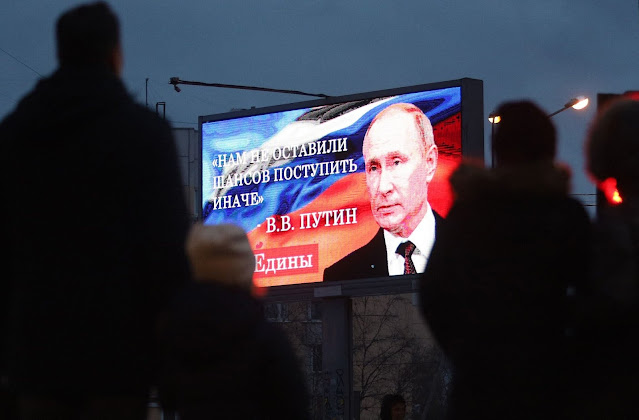
New York Times - "Vladimir Putin’s Clash of Civilizations"
By Ross Douthat

"It’s possible Putin just assumes the West is so decadent, so easily bought off, that the spasms of outrage will pass and business as usual resume without any enduring consequences. But let’s assume that he expects some of those consequences, expects a more isolated future. What might be his reasoning for choosing it?

Here is one speculation: He may believe that the age of American-led globalization is ending no matter what, that after the pandemic certain walls will stay up everywhere, and that the goal for the next 50 years is to consolidate what you can — resources, talent, people, territory — inside your own civilizational walls.

In this vision the future is neither liberal world-empire nor a renewed Cold War between competing universalisms. Rather it’s a world divided into some version of what Bruno Maçães has called “civilization-states,” culturally-cohesive great powers that aspire, not to world domination, but to become universes unto themselves — each, perhaps, under its own nuclear umbrella.

This idea, redolent of Samuel P. Huntington’s arguments in “The Clash of Civilizations” a generation ago, clearly influences many of the world’s rising powers — from the Hindutva ideology of India’s Narendra Modi to the turn against cultural exchange and Western influence in Xi Jinping’s China. Maçães himself hopes a version of civilizationism will reanimate Europe, perhaps with Putin’s adventurism as a catalyst for stronger continental cohesion. And even within the United States you can see the resurgence of economic nationalism and the wars over national identity as a turn toward these kind of civilizational concerns."

The Art of Passing


The Ringer - "The Art of Passing"

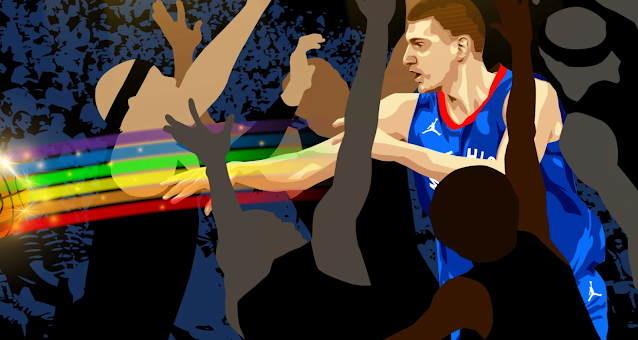
"In late December, TrueHoop published a piece by David Thorpe with the subheading: 3 pointers dominated for a while, now it’s physical defense. Passing is next. He lists five passes being used with increasing frequency in today’s game. The look-away bullet pass, the hook pass off a ball screen, the bounce pass off the dribble in transition, the slip screen pass leading to the rim, and the half-court thread-the-needle pass in traffic. Thorpe writes, “The way things are going right now, the future is going to hold a crazy rich set of opportunities for players who know how to deliver a killer dime.”

More than ever we see ball handlers come off screens and pass two and three guys away, take advantage of help defenders who would, in the name of readiness, cheat just a bit too far off their man. Sometimes, there’s not enough time to get a second hand on the ball. This has made it all the more important for players to add live-dribble passing to their bags. Say a big sets a screen a step or two above the 3-point line at the top of the key. The ball handler comes off the pick, freezes defenders with his eyes, and fires a left-handed, no-look, live-dribble sling pass to the opposite corner. The best of those are frozen ropes into a shooter’s hands. The best lead ball handlers in the NBA today can rocket one-handed darts with speed and accuracy from great distances and they can do it all with either hand without looking at who they’re throwing to. They can’t afford to telegraph where the ball is headed or have it arrive anywhere other than on target. It must fly true regardless of the angle at which it’s thrown. Odds are, if the pass is at the shoelaces, it might as well have not even happened."

Jeen-yuhs: A Kanye Trilogy


Our Flag Means Death and Streaming Business


March 3, 2022 on HBO Max.


"Cheap money and the digital revolution have helped debt-fueled innovators like Netflix upend the studio oligopoly of film and TV distribution. The incumbents have finally responded with their own digital platforms that, like the upstarts, must constantly be fed expensive new content. There’s a war not just for supremacy but for survival, and two major tech players—Apple and Amazon—have decided, for some reason, that they should be combatants in this war, even though they really don’t need to be. Add in the investment in entertainment by private equity firms like Blackstone, Silver Lake, and Apollo; the fact that the linear TV business, while shrinking, is still far from dead yet; and those teetering movie theaters, which are so challenged by shifting consumer habits that they are demanding more expensive product to lure people off their couches, and you have a perfect storm of cash, desperation, and the messy transition from one era of entertainment to another. “People don’t realize that these are the good old days,” I said to the lawyer.

This will all end at some point, or at least scale back dramatically. And perhaps soon, given Wall Street’s recent interest in business fundamentals, and leaders like incoming Warner Bros. Discovery C.E.O. David Zaslav saying things like, “Our goal is to compete with the leading streaming services, not to win the spending war.” As the new digital oligopoly establishes itself, the also-rans will either be consolidated or fall away.

That’s the scary future, and the lawyer and I agreed that no one really knows what the impact on creative people will be when that happens. But until then, it’s the Roaring ‘20s, where Disney will spend $33 billion this year, according to Wells Fargo analysts, where Paramount Global (née ViacomCBS) is still pretending it can compete with Disney, and where the talent community seems to have decided that taking huge sums of money up front is preferable to fighting to save the back-end compensation system that defined the linear era. As a result, the total amount spent on content worldwide this year will hit a record $230 billion, according to Ampere. That’s including sports rights, of course, but ten years ago, the spend was about half that.

It’s now totally normal when Apple—a hardware company—snatches a $200 million Brad Pitt film package from rival bidders, or throws a $40 million check at George Clooney. Given the market, NBC Universal was forced to commit $400 million—without a single script—to three films based on The Exorcist, which came out 50 years ago. When Netflix stole the two Knives Out sequels from Lionsgate with nearly half a billion dollars, it meant that Daniel Craig will likely make more money from his work in a small-budget mystery series than from playing James Bond. The pressure is on the platforms to compete, and compete now, and, in the aggregate, at least, the talent community is reaping the benefit."

Related,

"Under new chief Chris Licht, CNN will dial down the prime-time partisanship and double down on the network's news-gathering muscle, top sources tell me."

How Many People Watched the Winter Olympics?


Slate - "The Real Viewership Story of the Beijing Olympics"

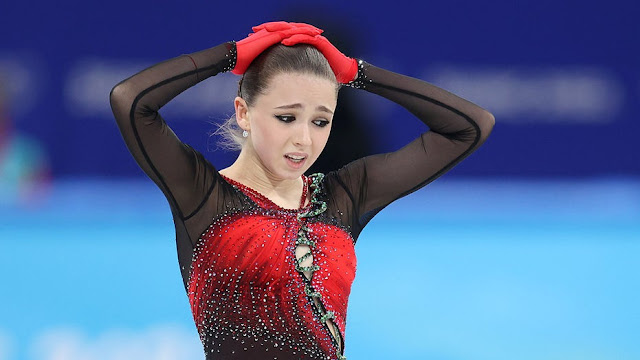
"To give you a sense of audiences across platforms, the linear television ratings for the broadcast featuring Nathan Chen’s gold-medal ice skating victory indicated a total of approximately 12 million viewers watched on NBC (and its associated TV channels). Yet, at YouTube, Chen’s Beijing Olympic videos have notched more than 16 million views. For a sense of proportion, when combining the numbers from NBC Sports’ YouTube videos that show Russian skater Kamila Valieva’s Olympic routines, you get more than 11 million views as of this writing. (The numbers might well be higher had NBC Sports left the standalone video of her final free skate posted to YouTube—the dramatic one in which the medals were decided and that was followed by the Russian team’s emotional reactions. As of this writing, the channel is now only sharing Valieva’s final routine as part of compilations featuring her competitors and much short video commentary about that scene that Defector’s Kalyn Kahler called “one of the most riveting and disconcerting sports TV moments” we’ve ever experienced.)

The television programs required enormous production costs, but YouTube, Tik Tok (with which NBC signed an exclusive marketing deal before the Games began), and NBC’s other partner platforms did not; they simply repurpose broadcast videos, meaning that social media’s video recycling only adds to NBC’s profitability. Those social media views will continue accruing for weeks, months, and years. At this point, it is no exaggeration to suggest that the overall social media viewership across all channels (including the official Olympics YouTube channel) for the Beijing Games totals in the hundreds of millions by now.

...

Cannibalizing audience has always been a threat when new media practices displace old ones. That’s the reason newspapers rushed into broadcasting in the 1920s by purchasing or starting radio stations, and why those radio stations bought up television licenses in the late 1940s and early 1950s. What’s largely forgotten today is the extent to which old media models funded those transitional eras. Radio advertising’s enormous profitability subsidized the inventiveness and creativity that early television needed to fully develop, just as television today is funding the online video revolution."

Telegram Behind the Scenes


Wired - "How Telegram Became the Anti-Facebook"

"In August 2021, Telegram hit 1 billion total downloads. During Facebook's disastrous, six-hour global outage in October, the app welcomed 70 million new “refugees” in a single day, according to Durov."

Fast Fashion and the Return Economy